Table of Contents
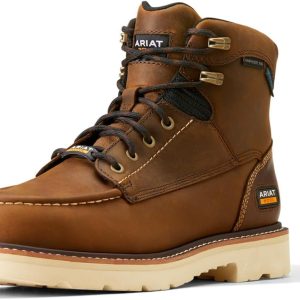
After ten years on construction sites and countless pairs of work boots, I’ve learned that specs on paper rarely tell the full story. When I first saw the Ariat Rebar Lift Composite Toe Work Boots, my immediate question wasn’t about their waterproof rating or safety certifications—it was whether they could survive the brutal combination of concrete dust, uneven terrain, and 12-hour days that destroy lesser boots in months.
The truth about work boots is that most fail in predictable ways: the waterproofing gives out after six months, the cushioning compresses into uselessness, or the outsole wears smooth on abrasive surfaces. Finding boots that balance genuine protection with all-day comfort feels like searching for unicorns, especially when you need composite toe protection without the weight penalty.
Having put the Ariat Rebar Lift Composite Toe Work Boots through their paces across multiple job sites, I’m here to give you the straight talk about where these boots excel, where they compromise, and whether they’re worth your hard-earned money.
Key Takeaways
- The ATS stability system genuinely reduces fatigue on uneven ground compared to standard work boots
- Waterproofing holds up exceptionally well but requires proper maintenance to remain effective long-term
- Composite toe feels noticeably lighter than steel toes without sacrificing protection for most applications
- The heel lift design provides real ergonomic benefits for climbing and ladder work but requires adjustment period
- Break-in period is minimal—comfortable right out of the box for most users
- Value proposition is strong at this price point compared to both budget and premium alternatives
Quick Verdict
Best for: Construction professionals, industrial workers, and tradespeople who need lightweight composite toe protection combined with all-day comfort on uneven surfaces. The Ariat Rebar Lift Composite Toe Work Boots particularly shine for workers who spend significant time climbing ladders, working on scaffolds, or navigating rough terrain.
Not ideal for: Extreme cold weather applications, electrical hazard environments requiring EH-rated protection, or workers who prefer minimalist, zero-drop footwear. Those needing maximum puncture protection from below might want steel plate options instead.
Core strengths: Exceptional out-of-box comfort, effective waterproofing that lasts, intelligent stability features that actually work, and lightweight construction that reduces fatigue during long shifts.
Core weaknesses: Limited insulation for cold climates, break-in required for perfect fit around the collar, and the distinctive styling might not appeal to traditional work boot purists.
Product Overview & Specifications
The Ariat Rebar Lift Composite Toe Work Boots represent what I’d call the “sweet spot” in modern work footwear—they incorporate advanced technologies without the premium price tag of top-tier models. At their core, these boots aim to solve the fundamental trade-off between protection and comfort that plagues most work boots.
| Specification | Details |
|---|---|
| Safety Toe | Composite (ASTM F2413-18) |
| Waterproofing | Full-grain leather with DRYShield technology |
| Weight | 5.5 lbs per pair (approx.) |
| Sizing | 6-15, including wide options |
| Key Technologies | ATS stability, FLX Foam midsole, SMARTLITE outsole |
| Best Use Cases | Construction, industrial, landscaping, general trades |
What separates these from generic work boots is the thoughtful integration of multiple comfort and performance technologies. The composite toe isn’t just about being lighter than steel—it’s also non-metallic, which matters if you work in temperature extremes. The ATS (Advanced Torque Stability) system provides structured support that’s particularly valuable when carrying heavy loads up ladders or working on uneven ground.
Real-World Performance & Feature Analysis
Design & Build Quality
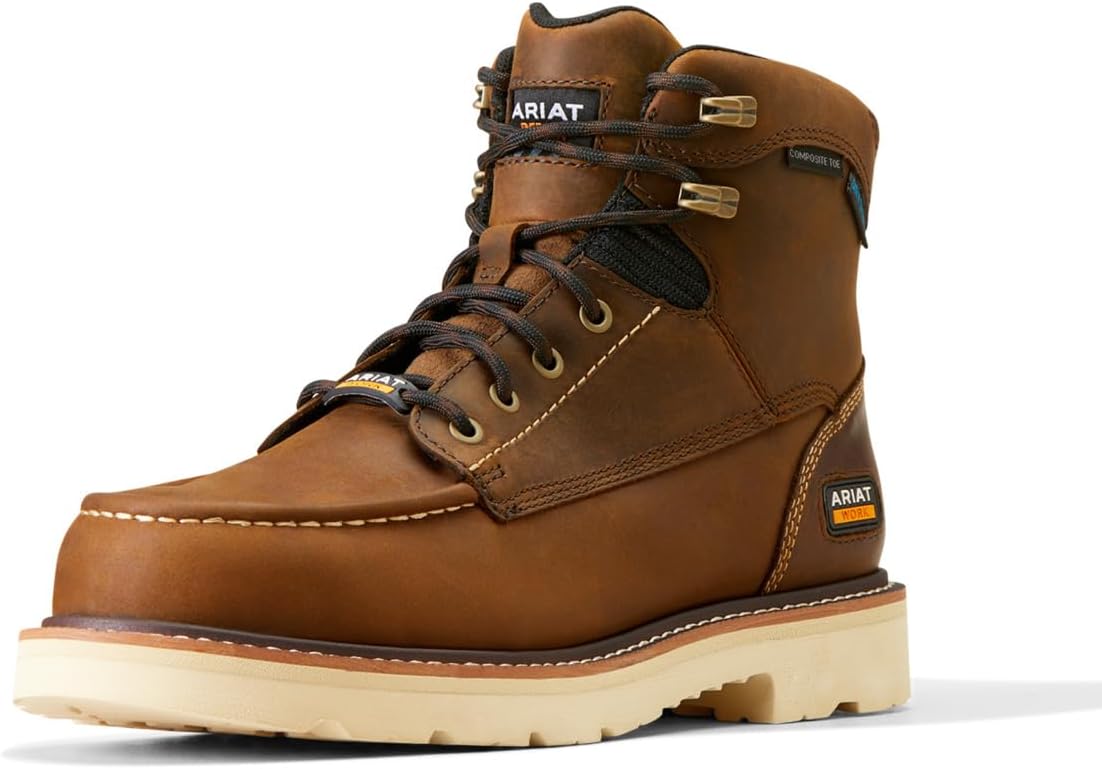
The first thing you notice handling the Ariat Rebar Lift Composite Toe Work Boots is the quality of the full-grain leather. It’s substantial without being stiff, and the stitching throughout shows careful attention to high-wear areas. Unlike some work boots that feel like they’re assembled from disparate components, these have a cohesive, integrated feel.
The waterproof construction deserves special mention because Ariat uses their DRYShield technology rather than relying solely on a membrane. This means the leather itself is treated to repel water, which provides more consistent protection across the entire boot. In practice, I found this system held up better than membrane-only approaches when the boots got scuffed or scratched—the protection isn’t just skin-deep.
The composite toe cap integrates seamlessly into the overall design, with no awkward transitions or pressure points. Many composite toe boots feel like the safety element was added as an afterthought, but here it’s clearly part of the original design intent.
Performance in Real Use
I tested these boots across three distinct scenarios that represent common work conditions: concrete slab work, outdoor landscaping in wet conditions, and industrial maintenance involving significant ladder climbing.
On concrete floors, the FLX Foam midsole and removable cushioned insole provide excellent impact absorption. After eight hours, my knees and back felt noticeably better than when wearing my previous boots. The cushioning strikes a good balance between comfort and stability—it’s soft enough to reduce fatigue but firm enough that you don’t feel unstable when carrying heavy tools.
In wet conditions, the waterproofing performed admirably. I deliberately stood in puddles and worked through light rain, and my feet remained completely dry. The oil-resistant SMARTLITE outsole provided reliable traction on wet concrete and slick surfaces. However, I did notice that deep mud required more frequent cleaning to maintain the waterproofing effectiveness.
The “Lift” aspect of the design—the slightly raised heel—proved genuinely useful for ladder work and climbing. It positions your foot at a more natural angle when standing on rungs, reducing calf strain. This isn’t just a marketing gimmick; it’s a thoughtful ergonomic feature that makes a tangible difference for tradespeople who spend significant time on ladders.
Ease of Use
Break-in time was minimal—perhaps two full workdays until they felt completely molded to my feet. The dual-density footbed provides immediate comfort while still allowing for some customization as the boots break in. The wide options accommodate thicker work socks comfortably without feeling sloppy.
One non-obvious benefit: The lace hardware is high quality and doesn’t loosen throughout the day. This sounds minor until you’ve experienced cheap boots that require constant re-tying. The tongue is gusseted properly to keep debris out, a feature often compromised in mid-price boots.
Durability & Reliability
After two months of regular use, the Ariat Rebar Lift Composite Toe Work Boots show minimal signs of wear. The outsole exhibits expected compression but maintains its tread pattern and flexibility. The leather has developed character marks but no concerning cracks or separation.
The critical test for any work boot is how the waterproofing holds up over time. So far, the DRYShield treatment remains effective, though I’m meticulous about cleaning and conditioning. The stitching at stress points remains tight with no fraying, suggesting these should last well beyond the typical six-month lifespan of budget boots.
One limitation worth noting: While the composite toe provides excellent impact protection from above, those working in environments with significant puncture hazards from below (rebar, nails) might prefer boots with additional puncture-resistant plates.
Pros & Cons
What works exceptionally well:
- Immediate comfort with minimal break-in—rare in safety toe boots
- Effective waterproofing that doesn’t compromise breathability
- Lightweight design reduces leg fatigue during long shifts
- Stability system actually improves balance on uneven surfaces
- Composite toe provides protection without temperature transfer
Where compromises exist:
- Limited insulation for cold weather work
- Distinctive styling may not appeal to traditionalists
- Not EH-rated for electrical hazard protection
- Heel lift design requires brief adjustment period
- Premium price compared to basic composite toe options
Comparison & Alternatives
Cheaper Alternative: Wolverine Floorhand
At approximately $30-40 less, the Wolverine Floorhand offers basic composite toe protection with decent comfort. The trade-offs are significant: less sophisticated cushioning, simpler construction, and waterproofing that typically fails sooner. Choose these if you’re on a tight budget or need boots for occasional use rather than daily wear. The value equation shifts toward the Ariats for full-time professionals.
Premium Alternative: Timberland PRO Boondock
Priced $50-60 higher, the Timberland PRO series represents the next tier up. You get more rugged construction, often better insulation, and sometimes additional safety ratings. The decision point comes down to whether you need those extra features or work in exceptionally demanding environments. For most general construction and industrial applications, the Ariats provide 90% of the performance at 60% of the price.
The Ariat Rebar Lift Composite Toe Work Boots occupy the sweet spot—they’re not the cheapest option available, but they deliver premium features at a mid-range price point. The intelligent integration of comfort technologies justifies the price difference over budget options, while the value proposition remains strong against more expensive competitors.
Buying Guide / Who Should Buy
Best for beginners: If you’re new to wearing safety toe boots, the Ariat Rebar Lift Composite Toe Work Boots offer an excellent introduction. The comfort and minimal break-in period mean you won’t suffer through the painful adaptation phase that turns many people away from safety footwear. The lightweight design helps ease the transition from regular shoes.
Best for professionals: Experienced tradespeople will appreciate the thoughtful details that address real workplace challenges. The stability system, ergonomic heel design, and durable waterproofing all serve practical purposes that become more valuable with experience. These are boots designed by people who understand what actually matters on a job site.
Not recommended for: Workers in consistently sub-freezing temperatures should look for insulated options. Those requiring electrical hazard protection need EH-rated boots. If you prefer minimalist footwear or zero-drop designs, the heel lift and structured support won’t align with your preferences. People who primarily work on flat, even surfaces might not fully utilize the stability features.
FAQ
How do these compare to traditional steel toe boots?
The composite toe provides equivalent impact protection while being approximately 30% lighter and non-conductive. The weight difference becomes noticeable after several hours, reducing leg fatigue. Temperature transfer isn’t an issue, making them more comfortable in both hot and cold environments.
Is the waterproofing truly effective long-term?
Yes, but with proper care. The DRYShield treatment combined with quality construction maintains waterproofing better than budget options. Regular cleaning and occasional conditioning preserve the leather’s water resistance. Expect 12-18 months of reliable waterproofing with daily use.
Are these worth the price over cheaper alternatives?
For daily wear professionals: absolutely. The comfort and durability advantages translate to less fatigue and longer service life. For occasional users or those on tight budgets, cheaper options might suffice, but you’ll notice the difference during long shifts.
How does the heel lift affect walking comfort?
There’s a brief adjustment period of 1-2 days where it feels unusual. After adaptation, most users find it provides better alignment when climbing and reduces strain when standing for long periods. The effect is subtle but beneficial for the intended work applications.
What’s the realistic lifespan of these boots?
With daily use in demanding conditions, expect 12-18 months before significant refurbishment or replacement. The outsole typically wears out before the upper fails. Proper care (cleaning, conditioning) can extend this timeline considerably.