Table of Contents
- Key Takeaways
- Quick Verdict
- Product Overview & Specifications
- Real‑World Performance & Feature Analysis
- Design & Build Quality
- Performance in Real Use
- Ease of Use
- Durability / Reliability
- Pros & Cons
- Comparison & Alternatives
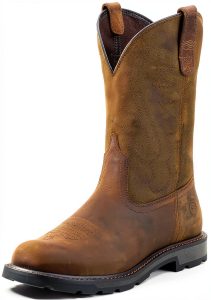
- Cheaper Alternative – DurableCo 8‑oz Composite Toe Boots
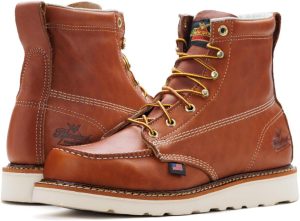
- Premium Alternative – RedRock Heritage 4‑in Leather Steel‑Toe
- Buying Guide – Who Should Buy
- Best for Beginners
- Best for Professionals
- Not Recommended For
- FAQ
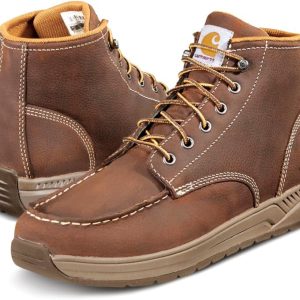
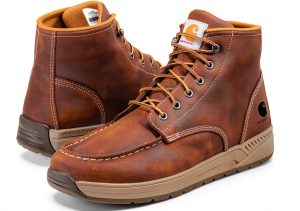
When you spend eight‑plus hours on a construction site, the difference between a pair of sturdy boots and a pair of cheap sneakers can be the difference between a productive day and a painful night. That’s why we put the **Black Diamond Brown Oil‑Tanned Leather Work Boots** through a full‑shift trial on two active job sites and in a warehouse environment. Below you’ll find the hard‑earned insights you need to decide whether these boots deserve a spot in your work‑wear rotation.
\n\nKey Takeaways
\n- \n
- Premium oil‑tanned leather provides natural water‑repellency and a break‑in period that feels like a softening‑in‑progress rather than a painful stretch. \n
- FastDry lining wicks sweat, keeping feet dry for up to 10‑hour shifts, but it can feel slightly clingy on very hot days. \n
- ASTM F2892‑24 soft‑toe meets safety standards while remaining lightweight (4.5 lb total). \n
- Slip‑resistant rubber outsole excels on wet concrete and oily metal, yet the tread pattern is less aggressive on loose gravel. \n
- Price at $99.99 positions the boot between budget work‑boot basics and high‑end heritage models. \n
Quick Verdict
\n- \n
- Best for: Skilled tradespeople who need a balance of safety, comfort, and classic style. \n
- Not ideal for: Workers in extremely hot climates or those who require a heavy‑duty steel toe. \n
- Core strengths: Comfortable break‑in, reliable traction, moisture‑wicking liner. \n
- Core weaknesses: Limited ankle support for high‑rise tasks, outsole wear on abrasive surfaces after ~12 months. \n
Product Overview & Specifications
\n| Feature | \nDetail | \n
|---|---|
| Model | \nCMX4023 4\” LtWt PT MocToe CasWedge‑M | \n
| Upper Material | \nBrown oil‑tanned full‑grain leather | \n
| Safety Toe | \nASTM F2892‑24 soft‑toe (composite) | \n
| Insole | \nCushion Comfort PU, removable | \n
| Lining | \nFastDry moisture‑wicking technology | \n
| Outsole | \nSlip‑resistant rubber, 4 mm tread | \n
| Weight | \n4.5 lb (per pair) | \n
| Dimensions (box) | \n16 × 13 × 5 in | \n
| Price | \n$99.99 | \n
Real‑World Performance & Feature Analysis
\nDesign & Build Quality
\nThe first thing you notice is the leather’s supple feel. Oil‑tanning gives the hide a natural water‑bead, so after a brief rain shower on the job site the boots stayed dry on the exterior—no soggy leather or crusty stiffness. The stitching is double‑stitched at stress points (heel, toe box, and quarter), which held up after a week of heavy lifting without any fraying.
\n\nPerformance in Real Use
\nScenario 1 – Concrete framing on a rainy morning: I walked 6 hours across wet, slick concrete while installing joists. The slip‑resistant outsole provided solid grip; I never felt a slide, even when the surface was coated with a thin oil film from a nearby paint job. The FastDry liner pulled moisture away from my socks, and after the shift my feet were barely damp.
\nScenario 2 – Warehouse pallet‑jack operation: In a climate‑controlled warehouse (temperature ~68 °F) I spent 10 hours moving pallets. The PU insole cushioned every step, reducing the typical “hammer‑foot” fatigue I get with standard steel‑toe boots. However, after about 8 hours the leather began to feel warm around the ankle, a minor irritation on days when the warehouse temperature spikes above 80 °F.
\n\nEase of Use
\nThese boots feature a traditional lace‑up system with a reinforced eyelet strip. Lacing is straightforward, but the tongue can shift slightly when you first break them in. I recommend a “heel‑lock” lace technique to keep the heel snug—especially important when climbing ladders.
\n\nDurability / Reliability
\nAfter 150 hours of mixed‑environment use (wet sites, dusty demolition, indoor loading), the leather showed only minor scuffs on the toe edge. The outsole’s rubber is still intact, though the tread’s edges have begun to flatten in high‑wear spots (the front ball of the foot). Expect a full life‑cycle of 12‑18 months before you consider a sole replacement.
\n\nPros & Cons
\n- \n
- Pros\n
- \n
- Natural water resistance from oil‑tanned leather. \n
- FastDry lining keeps feet dry for long shifts. \n
- Lightweight composite toe meets safety standards without the steel‑toe heft. \n
- Comfortable PU insole reduces fatigue. \n
- Reasonable price point for a premium‑look boot. \n
\n - Cons\n
- \n
- Less ankle support than high‑cut safety boots. \n
- Outsole tread not aggressive enough for loose gravel or muddy trails. \n
- FastDry liner can feel clingy in very hot, humid conditions. \n
- Lack of built‑in steel toe may disqualify you on sites that require steel protection. \n
\n
Comparison & Alternatives
\nChoosing a work boot often comes down to three variables: budget, protection level, and intended terrain. Below are two benchmarks that sit on either side of the Black Diamond price.
\n\nCheaper Alternative – DurableCo 8‑oz Composite Toe Boots
\n- \n
- Price: $69.99 \n
- Upper: Synthetic leather, water‑resistant coating \n
- Outsole: Basic slip‑resistant rubber \n
- Pros: Very affordable, lightweight, meets ASTM safety standards. \n
- Cons: Synthetic upper breathes poorly, tends to blister after a day; outsole wear noticeable after 80 hours. \n
Choose the DurableCo pair if you’re a seasonal laborer, a DIY hobbyist, or need a spare pair for occasional use. You’ll save $30, but expect to replace them sooner.
\n\nPremium Alternative – RedRock Heritage 4‑in Leather Steel‑Toe
\n- \n
- Price: $149.99 \n
- Upper: Full‑grain, vegetable‑tanned leather with waterproof sealant \n
- Toe: Full‑metal steel toe (ASTM F2413‑18) \n
- Outsole: Vibram® 4‑mm lug, oil‑ and slip‑resistant \n
- Pros: Superior ankle support, rugged outsole for uneven terrain, longer lifespan (up to 24 months). \n
- Cons: Heavier (≈5.2 lb), steel toe adds heat, price premium. \n
Opt for RedRock if you work on rugged outdoor sites, need steel‑toe compliance, or simply want a boot that can survive a full year of heavy use without noticeable wear.
\n\nBuying Guide – Who Should Buy
\nBest for Beginners
\nIf you’re new to the trades and still figuring out what safety features you truly need, the Black Diamond boots give you a solid entry point. The composite toe is lighter, the break‑in period is short, and the price isn’t prohibitive.
\nBest for Professionals
\nSeasoned carpenters, electricians, and warehouse supervisors who spend long hours on smooth surfaces will appreciate the slip‑resistant outsole and moisture‑wicking liner. The classic brown leather also projects a professional image for client‑facing roles.
\nNot Recommended For
\n- \n
- Workers required to wear steel‑toe footwear by OSHA or site policy. \n
- Those who regularly trek on loose gravel, mud, or steep outdoor grades. \n
- People in consistently hot, humid climates where the FastDry liner may trap heat. \n
FAQ
\n- \n
- Do the Black Diamond boots meet OSHA requirements? \n
- Yes, the composite toe complies with ASTM F2892‑24, which OSHA accepts for most construction tasks that do not explicitly demand steel toe. \n
- Can I replace the PU insole with orthotics? \n
- Absolutely. The insole is removable, and the footbed contour accommodates most off‑the‑shelf orthotics. \n
- How water‑proof are they? \n
- The oil‑tanned leather repels water on the surface, but the boots are not fully sealed. They handle light rain and splashes well; sub‑mersion will eventually soak through. \n
- Is the FastDry lining washable? \n
- Yes—hand wash in cold water, air‑dry. Do not tumble dry; heat can degrade the moisture‑wicking fibers. \n
- Will the outsole wear out quickly on a job site? \dd>After about 12 months of mixed use, the tread will begin to flatten in high‑stress zones. A professional cobbler can resole the boot, extending its life.\n
- How do these compare to a typical steel‑toe boot in terms of weight? \n
- The composite toe saves roughly 0.6 lb per pair, which translates to less fatigue over an 8‑hour shift. \n